QR Tag for Dogs and Cats: What a Connected Collar Really Changes
September 28, 2026 · Équipe Pista
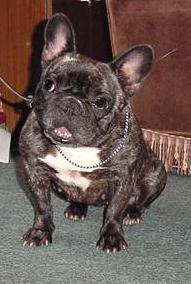
Your pet already has two identities: the legal one — the microchip or tattoo, which speaks to equipped professionals — and the immediate one — the collar, which speaks to the first passer-by. The QR tag adds to the second layer: it turns any smartphone into a contact channel, without exposing your number. Here's exactly what it does, how the Pista collar tag works, and its real limits.
The chip finds pets, but not right away
An identification chip is a passive RFID chip: no battery, no transmission, no geolocation. It's read at a few centimetres, with a reader that vets, pounds, shelters and gendarmerie stations have — not the neighbour who crosses your dog at the street corner.
The real path of a chipped animal that gets found looks like this: a passer-by must first catch the animal, then bring it to an equipped professional, who reads the chip and traces the I-CAD registry — provided your details are up to date there. Each of these links can take hours or days, and the first — capture by a stranger — is often the most fragile. The chip is the legal safety net, mandatory and irreplaceable; it's not a contact channel.
A useful reminder: on the dog side, the law considers "stray" any dog found more than 100 m from its owner or beyond earshot of their voice (article L. 211-23 of the Rural Code) — stray animals can be taken to the pound, where the manager must look for the owner "as quickly as possible" if the animal is identified, including by a collar bearing the owner's name and address (article L. 211-25). A readable ID on the collar is no gadget: it's what can skip the pound step entirely.
The finder has a smartphone, not an RFID reader
Most quick reunions go through a passing human — someone who sees the animal, approaches, and wants to reach the owner now. What they can do spontaneously: read a tag, dial a number, scan a QR code.
The classic engraved tag has done that job forever, with two known flaws: your number is exposed to anyone who approaches the animal (including ill-intentioned people — a public number tied to a search notice attracts lost-pet scams), and the engraving wears off or goes stale when you change phones.
The QR code adds a layer: scan → web page → message. The question is what's behind the link.
What the Pista collar tag does
The feature exists and works as follows (verified in the code):
- You create a pet profile in your account, "My pets" section — name, species, breed, sex, colour, optional I-CAD chip number, notes, up to 6 photos. The profile is strictly private: it's neither listed nor visible from your profile — only the "found" page, accessible solely to whoever knows its address (the QR one), exposes the name, photo, species and colour.
- The "Collar QR" button opens a printable tag reserved to you alone: a QR code, the pet's name, the lines "Been found? Scan me!" and "Contact via Pista — zero private data", plus the URL in clear text and a print button. To laminate or slip into a collar tag holder.
- The finder scans and lands on the pet's public page: photo, name, species and colour — plus a "Contact the owner" button that opens a conversation in the internal messaging. Neither your number, nor your email, nor the address, nor the chip number nor your private notes appear: the page only exposes what identifies the animal. It isn't even indexed by search engines (noindex) — you only reach it by scanning, or by typing the address printed in clear under the QR for phones that can't read it.
- You get the message in your account, without anyone ever having seen your contact details.
Two code details show the care put into the journey: if you scan your own pet's collar (to test it, say), the page detects it and sends you to your account rather than the contact button — and on the finder side, the send button offers a sign-in with automatic return to the pet's page, so the thread isn't lost while the account gets created.
The journey is therefore: pet found → scan → message → you call back and pick up. Seconds instead of a mandatory professional stop.
A worthwhile bonus: the same pet profile pre-fills an alert in one click the day the animal disappears — photo, description and private chip already in place, right when every minute counts.
Honestly, the limits
- The finder must create an account to write via the messaging — that's the price of masked contact and traceability. A call on an engraved number stays more direct; that's why the tag complements the classic tag rather than replacing it.
- Smartphone and network required: a QR can't be scanned in a dead zone or by someone without a phone.
- It's paper: laminate the tag or put it in a collar sleeve, and reprint it when it wears. The link itself doesn't change as long as the profile exists.
- None of this replaces the chip: if the collar is lost or removed, the chip remains the only channel — and it's mandatory (identification required for every dog before transfer, and for every cat born since 2012). See the I-CAD procedure.
- A QR doesn't prevent runaways and locates nothing: to track a moving animal, it's another technology — see our GPS, beacon and AirTag comparison.
Who it's most useful for
- Dogs walked daily — first contact possible even before the pound.
- Cats with outdoor access: a "stray cat" fed by a neighbour can be identified in one scan instead of ending up at the pound or "adopted" by mistake.
- Any pet whose public number is a problem: the engraved tag exposes your phone to everyone; the QR shows nothing.
Setup takes under ten minutes: create your profile in your account (sign-in or registration required), open "Collar QR", print, laminate, attach. And if the animal is already lost, the tag is no longer the right tool — it's the search alert you need to publish.