Stolen Dog: What to Do — Police Report, I-CAD and Resale Watch
September 28, 2026 · Équipe Pista
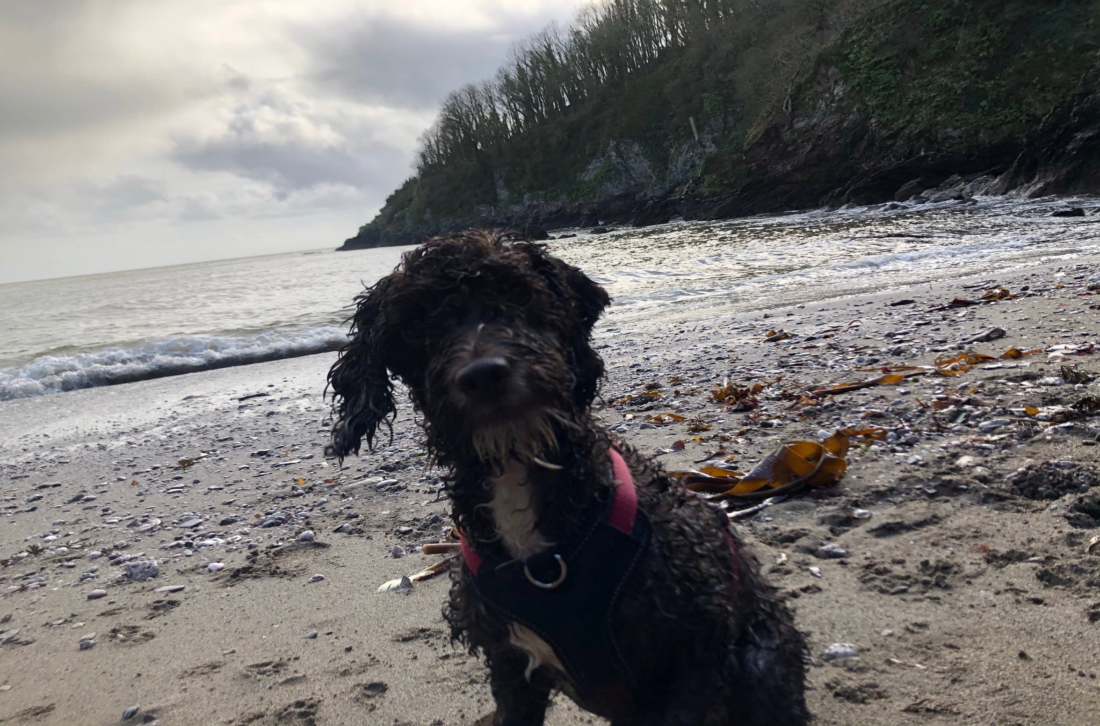
The vast majority of disappearances are runaways — but theft does happen: in-demand breeds, puppies, hunting or working dogs, animals "scoped out" in a garden. The problem isn't only getting the dog back: it's knowing what you're dealing with, because the response differs. Here's how to tell the two apart, and what French law actually lets you do.
This article describes French law — Pista operates in France first. Elsewhere the principle is the same: file a formal theft report with the competent police authority rather than handling it alone.
Runaway or theft: the clues that settle it
No single clue proves theft, but their combination points strongly to it:
- How the dog disappeared: a dog tied outside a shop, inside a car, or in a garden whose gate was locked didn't "slip off" on its own. A plain runaway implies a way out — dug under the fence, open gate, snapped lead.
- The collar or tag found on the spot: the most telling clue. A collar doesn't come off by itself — if you find it where the animal vanished, someone handled it. Keep it as is; it can serve as evidence.
- Witnesses: neighbours' doorbells and cameras, shopkeepers, passers-by who saw someone approach the animal or an unusual vehicle. Ask quickly: private camera footage is sometimes overwritten within days.
- Context: a sought-after breed or an unspayed female, several similar disappearances in the same area, prowlers reported by neighbours, insistent "buyer" calls in the previous weeks.
Without physical evidence, assume a runaway: statistically it's the most likely hypothesis, and the standard search protocol stays top priority — the 5 reflexes of the first hours apply whatever the scenario. The two tracks aren't exclusive either: you can canvass the neighbourhood in the morning and file a report in the afternoon.
Filing a report: the act that makes the theft real
Legally, a pet is a "living being endowed with sentience" (article 515-14 of the Civil Code) but remains "subject to the property regime". Taking it therefore falls within the definition of theft: "the fraudulent taking of another's property" (article 311-1 of the Criminal Code) — simple theft punishable by three years' imprisonment and a €45,000 fine, with an aggravating circumstance when the theft feeds the illegal animal trade.
In practice:
- Go to the gendarmerie or police station, without delay: the earlier the report, the more credible and workable it is.
- Bring proof of ownership: I-CAD identification card, vet bills, dated photos, pedigree if any. This is what makes you the identifiable victim of the theft.
- If they refuse to take your report: judicial police officers and agents are bound to receive victims' complaints (article 15-3 of the Code of Criminal Procedure). If the refusal persists, write directly to the public prosecutor (procureur de la République) of the competent court, with the facts and your evidence.
The filing receipt isn't a formality: it's the key to what follows, because I-CAD requires it to record the "stolen" status.
The "stolen" flag at I-CAD: the anti-resale lock
A standard loss report is filed online from your owner account on filalapat.fr — see our step-by-step procedure. The "stolen" status is declared separately and requires the report:
- Email contact@i-cad.fr with "Déclaration de vol" in the subject line, your full owner details (surname, first name, address, phone) and a copy of the police report receipt stating the theft of the animal.
- Only the owner registered in the national database can make this declaration — and station log entries ("main courante") are no longer accepted: a formal complaint is required.
The effect is precise and powerful: the animal is recorded as stolen in the national database, which blocks any fraudulent transfer — a change of registered keeper on the chip can no longer go through — and alerts the professionals who use the registry. Concretely, any vet, shelter or pound that scans the chip will see the animal as wanted. That's the lock that makes theft so unprofitable: the animal becomes unsellable through clean channels.
One nuance worth knowing — and it argues for speed: if a change of keeper has already been validated without your authorisation, I-CAD can only reverse it by court order. Hence the order of operations: report first, "Déclaration de vol" email right after — ideally within 24-48 hours.
Watching resale — without accusing anyone
A stolen dog is rarely kept long by the thief: it's sold, "given away" or passed on. Resale is therefore your second search ground:
- Watch sale and transfer listings over a wide radius, including breed-specific groups — and keep watching for weeks: resale can come late.
- Check the "found" and "spotted" posts published around you on the alert map: a stolen dog then dumped or kept by a third party becomes a standard "found dog" again.
- Pass leads to the investigators, don't settle them yourself: posting "stolen by the neighbour" on social media without proof is defamation — and it backfires in the very court that should rule in your favour. A suspicious listing, a number, a resale account: screenshot it and attach it to the complaint.
- Keep one distinguishing mark secret, out of your public photos: a spot, a scar, a coat peculiarity. That's what settles "it's my dog" in front of an officer or a vet.
- Never pay a ransom or a reward in advance. A real thief demanding money is a police matter; a fake contact claiming to hold the animal against payment is a scam — both scenarios, and their reflexes, are in our anti-scam guide.
That last point has a practical consequence: publish your search where your number isn't exposed. A search notice with a visible phone number turns you into a target — the thief knows you'll pay, scammers know you're vulnerable. On Pista, exchanges go through internal messaging: your number is never published, the chip number you entered stays private, and every message leaves a usable trace if the exchange turns suspicious. A sighting can be reported free of charge on the alert page, geolocated — nobody needs your phone number to help you.
Don't neglect the field search
Even in a confirmed theft, the dog can resurface through the classic channel: released by a panicked or overwhelmed thief, escaped from where it was held, or "picked up" by someone who thought it was a stray and took it to a vet or a pound. That's exactly where the chip + "stolen" status + active alert combination plays its part: the professional reads the chip, the registry says "wanted", the return becomes a formality.
So keep everything running in parallel: Pista alert published or renewed, pounds and shelters in the area notified (see the town hall and pound procedure), posters on busy routes, I-CAD details up to date. The judicial side moves slowly; the field side can pay off from day one.
Your pet has just disappeared — or you suspect a theft? Post the alert, file a report, lock down I-CAD: three moves that reinforce each other. And if a pushy "contact" talks money before talking about the animal, reread the warning signs that don't lie.