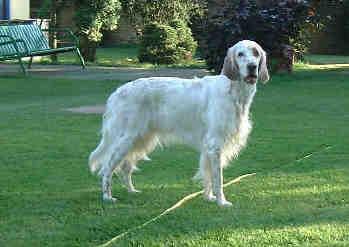
Your dog has just disappeared. The first hours are decisive: most recovered dogs are found within a few kilometres of where they bolted. But a lost dog isn't searched for like a cat — it covers ground, answers to its name… or freezes into survival mode and flees everyone, including you. Here are the five reflexes to adopt, in order.
1. Comb the last-seen point, now
Don't head home to "make posters" just yet. A frightened dog often hides within a few hundred metres — under a car, in a garden, behind a bush — or circles in a territory that has become foreign to it.
Take treats and the lead. Work the area in a spiral from the point of disappearance, asking every passer-by if they've seen them — joggers and dog-walkers are your best eyes, they know the neighbourhood animals. And remember this: a dog in flight mode may not come to its owner. If it sees you and runs off, don't chase — crouch down, look away, speak softly. As a last resort, sit down and let it come back.
2. Post a neighbourhood alert
This is where Pista comes in: post an alert with a photo, approximate location and description. Neighbours watching the sector (radius of 1 to 20 km, each person's choice) are notified instantly — and every reported sighting arrives geolocated, with its date, on the alert's timeline.
Stay factual in the description: breed, colour, collar, behaviour ("friendly" vs "fearful, do not chase" — crucial information for whoever crosses them), distinguishing mark. Avoid publishing your exact address or phone number: exchanges go through internal messaging, which protects you from scams. And if a "found" or "sighting" alert already exists for a dog in the sector — or if someone posts one within the hour — matching is automatic, you'll be notified of a possible match.
3. Report the loss to I-CAD (Filalapat)
If your dog is identified — microchip or tattoo, mandatory before 4 months for a dog — report the loss on filalapat.fr or from your owner account. A few minutes, free. The declaration makes your dog "wanted" in the national registry: any pound, vet or shelter that scans their chip finds you. Check along the way that your contact details are up to date — an old address blocks reunions. The full details: reporting a loss to I-CAD, step by step.
4. Alert local actors
A stray dog has a well-defined official circuit — run through it:
- Municipal police or gendarmerie: straying on the public highway falls to municipal services. A dog reported wandering can be picked up by them even before the pound.
- The pound attached to your commune (contact details displayed at the town hall, legal obligation): that's where found dogs pass through. Important: a dog is only kept 8 working days before being considered abandoned — call early, call often.
- Local vets and emergency clinics: an injured dog — a road accident in particular — is brought there first.
- Local community groups — check our groups directory to find those in your département.
5. Protect yourself from scams
Unfortunately, search notices attract fraudsters: fake "approved couriers" asking for a deposit, ransoms payable in prepaid cards, fake vets demanding fees by phone, and even supposed "chip geolocation" services — a chip cannot be geolocated, it's impossible. Never pay to recover an animal: handover is free, in person, after verification. The pattern details: spotting a scam in 30 seconds.
Why a dog bolts (and where it takes them)
Understanding the trigger sharpens the search: fear (fireworks, a gunshot, a storm, an accident) projects the dog into flight mode — it runs far, fast, then hunkers down; attraction (a female in heat in the area, game, the smell of food) makes it drift over a territory it half-knows; context (a move, staying with someone else, a new adoption) sometimes makes it attempt a return to the old home — then post the alert on both sectors. A dog pursued by its fear can cover several kilometres on the first night; that's why the digital alert, covering 20 km of watchers, exceeds what your legs can do.
The dog you see but can't catch
A frequent and frustrating case: sightings follow one another — often in the same sector — but the dog bolts at every approach. The right method isn't pursuit: it's settling. Set out a bowl and a water point where it returns, at a fixed time; give it time to make that spot a routine over several days. The capture trap or the habituation approach come next, often with help from associations used to long-fled dogs.
In rural areas: adjust the perimeter
In the countryside, the rules shift: the kilometres are emptier, but open farms, barns and sheds are classic refuges for a stray dog — warn farmers and distant neighbours by phone rather than with posters. During hunting season or after fireworks, shelters and gendarmerie stations receive more reports: that's where to call first.
After the first hours: switching to a durable rhythm
If the first lap yielded nothing, don't let up — change rhythm:
- Search at dawn and dusk: a fled dog moves when the streets empty.
- Handle every sighting methodically: a spotted dog must not be chased at a run — reach the area, settle in, let it come. If sightings fix on the same sector, that's where it lives.
- Renew the alert: a Pista alert lasts 30 days, renewable up to 3 times — several months of active watch without starting from zero. Dogs are recovered weeks after bolting, including several kilometres away.
- Print the poster generated from the alert: the QR code points to the up-to-date record, without exposing your number.
- Call the pound back regularly: the grace custody period is only 8 working days — a captured dog must not wait for you to think of calling again.
- Widen in rings: reported sightings concentrate the search where the dog settles; without sightings, extend posters and calls to neighbouring communes.
Every reunion matters. When your dog comes home, mark the alert "Found" — they'll join the reunion wall — report the return to I-CAD, and your story will give hope to others.



